125~400cc Cruiser & Scooter | Slat Conveyor + Overhead Hanger + Engine Lift + Servo Fastening
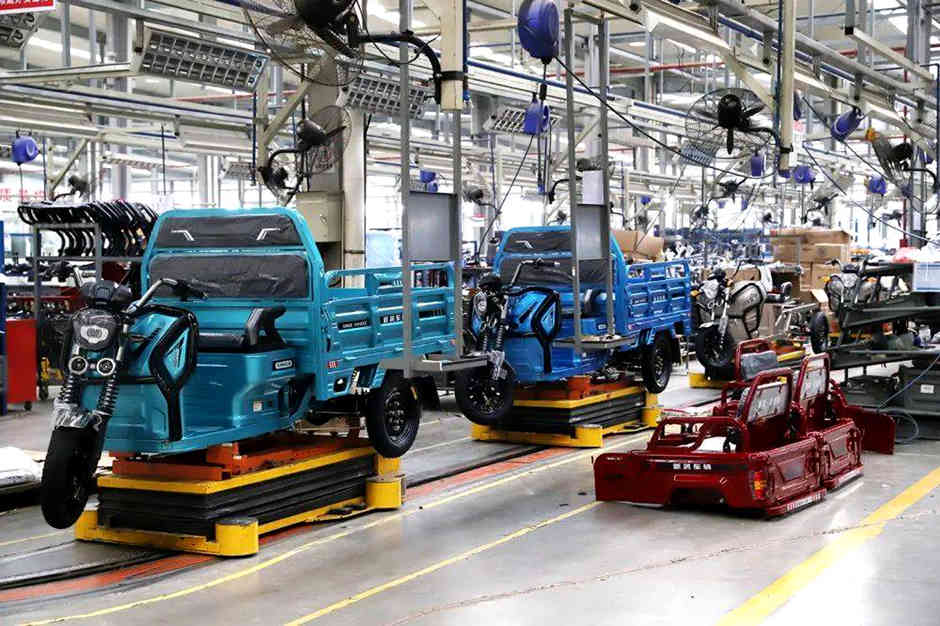
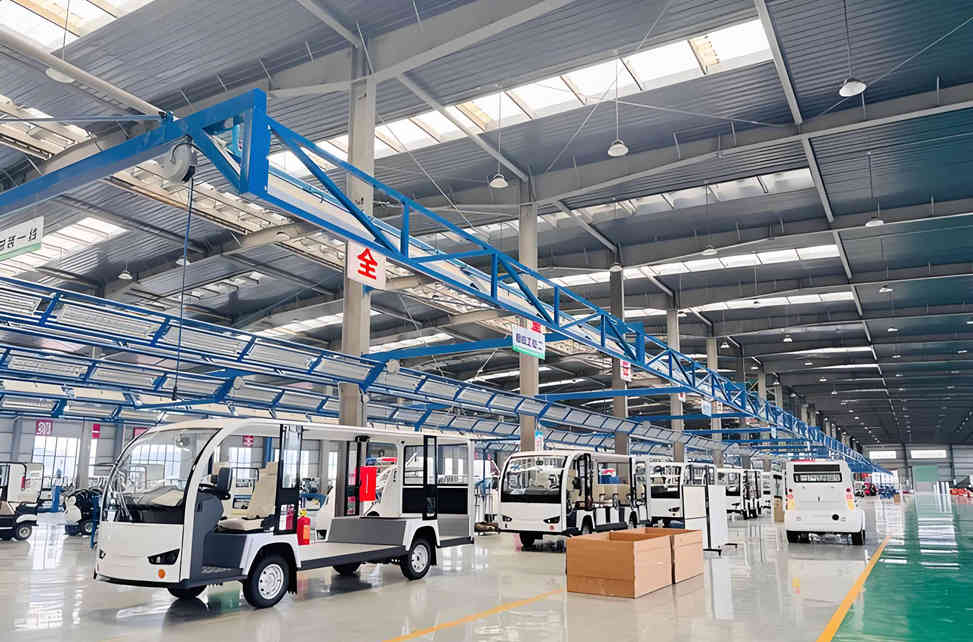
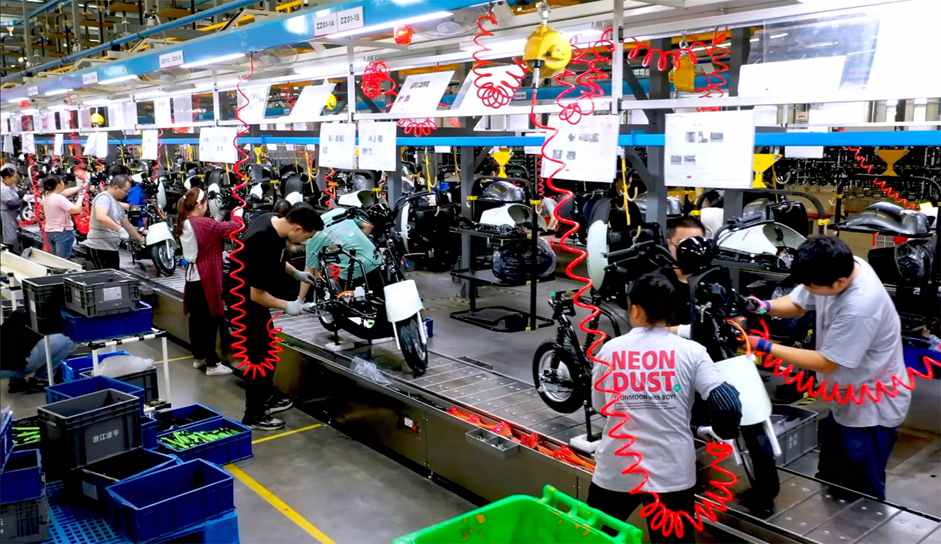
From 125cc to 400cc, both cruisers and scooters run on this line. A slat conveyor carries the frame. The engine is married from below at a dedicated suspension station — unlike e-scooters, a motorcycle engine weighs tens of kilograms and cannot be lifted manually.
Three zones divide the line. The front handles the frame and steering column. The middle is the core — engine marriage. A lift raises the engine from a pit below, aligning it with the frame. The operator assists from the pit edge. The lift locks at the correct height. Then come the swing arm, shocks, and exhaust. The rear section installs the fuel tank, seat, and body panels.
The engine lift is electric, with ±0.5mm positioning accuracy. Suspension hangers rotate ±90°, letting operators work without walking around the bike. A roller dynamometer at the end tests power output and brakes under load. An exhaust extraction system connects to each test station to prevent CO buildup.
Torque control uses servo spindles. Torque curves upload in real time. If a customer complains about pulling to one side, you pull up the torque data for that bike’s four critical bolts.
Technical Specifications
Applicable Models: 125–400cc motorcycles — both cruisers (cross-seat) and scooters; single-cylinder and twin-cylinder configurations; fuel-injected and carbureted variants.
Line Layout: Three-zone layout — front (frame and steering column assembly), middle (engine marriage — the core station), rear (fuel tank, seat, and body panels). Slat conveyor carries the frame; overhead suspension hangers rotate ±90° for operator access from both sides without walking around the vehicle.
Core Equipment: Electric engine lift (±0.5mm positioning accuracy) that raises the engine from a pit below for marriage; roller dynamometer at end of line for power output and brake testing under simulated road load; exhaust extraction system connected to each test station to prevent CO buildup; servo spindles for critical bolt fastening with real-time torque curve upload.
Key Technical Features: Engine marriage from below — essential for engines weighing tens of kilograms, cannot be lifted manually. Suspension hanger rotation saves operator walking time. Torque data archived per vehicle — if a customer reports pulling to one side, the torque data for that bike’s four critical bolts can be retrieved instantly. Exhaust extraction prevents workshop CO accumulation during dynamometer testing.
Production Metrics: Cycle time 4–6 minutes per unit; three-zone layout allows partial buffering between sections; torque data retained per vehicle for warranty analysis; dynamometer test simulates road load conditions.