L6e/L7e Assembly — Tighter Tolerances Than Golf Carts, Lower Cost Than Passenger Cars
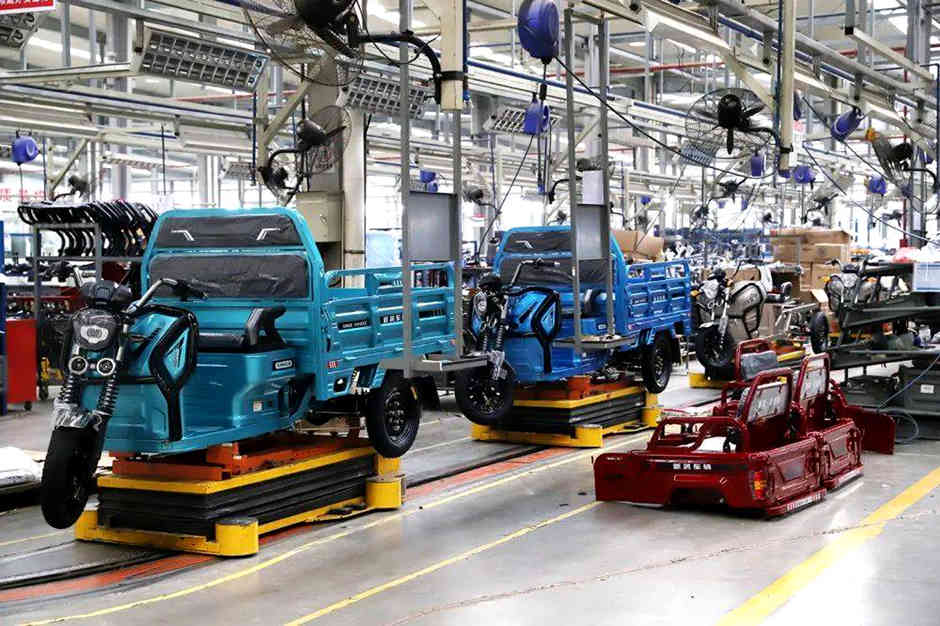
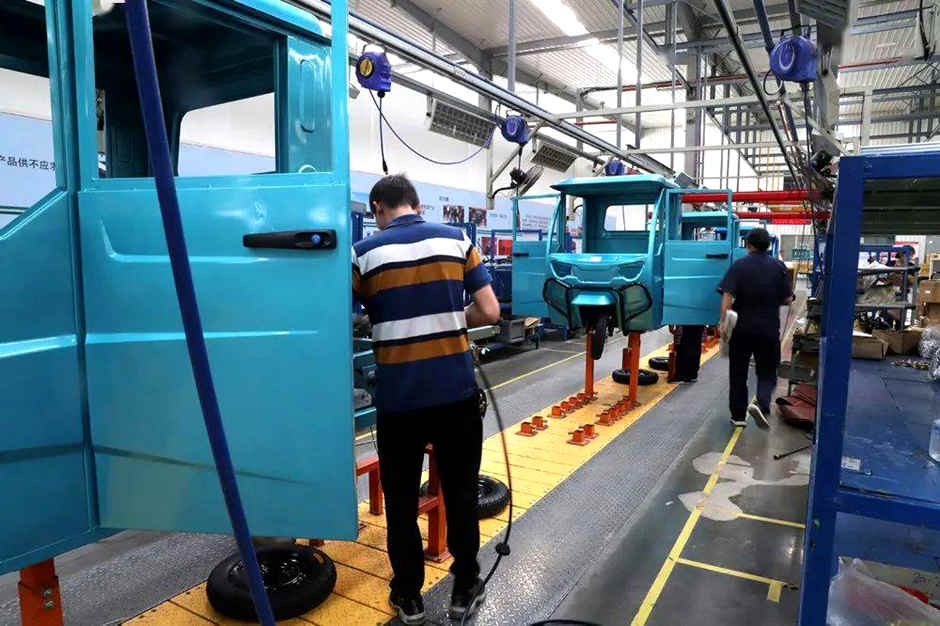
L6e and L7e vehicles are a step up from golf carts. Heavier, more assembly depth. Slat conveyor thickness increases to 8mm, capacity to 2.5 tons. Chassis and body are split into two sections: the chassis section handles front/rear axles, motor, and brakes; the body section handles body drop and interior.
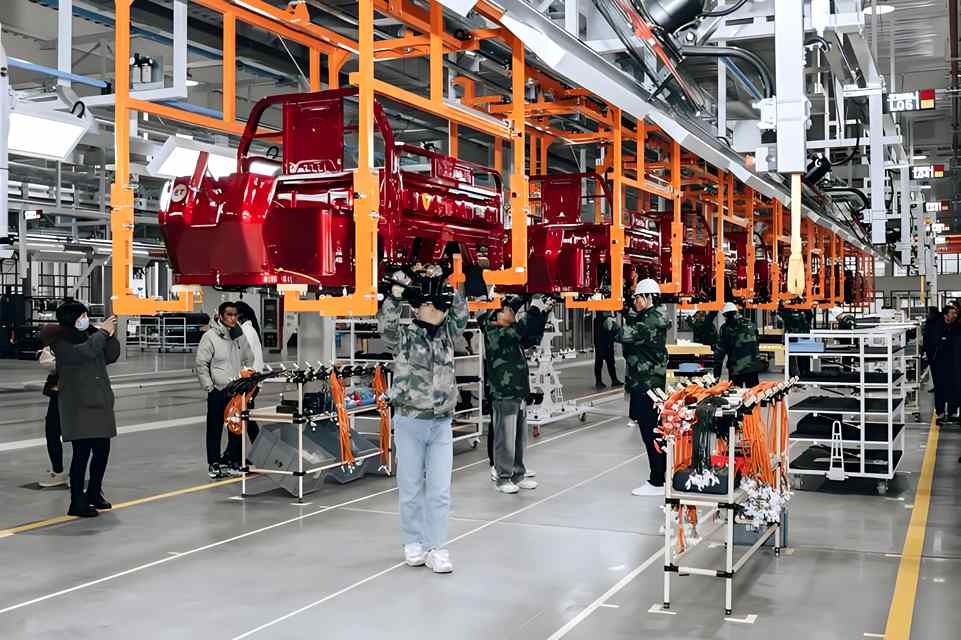
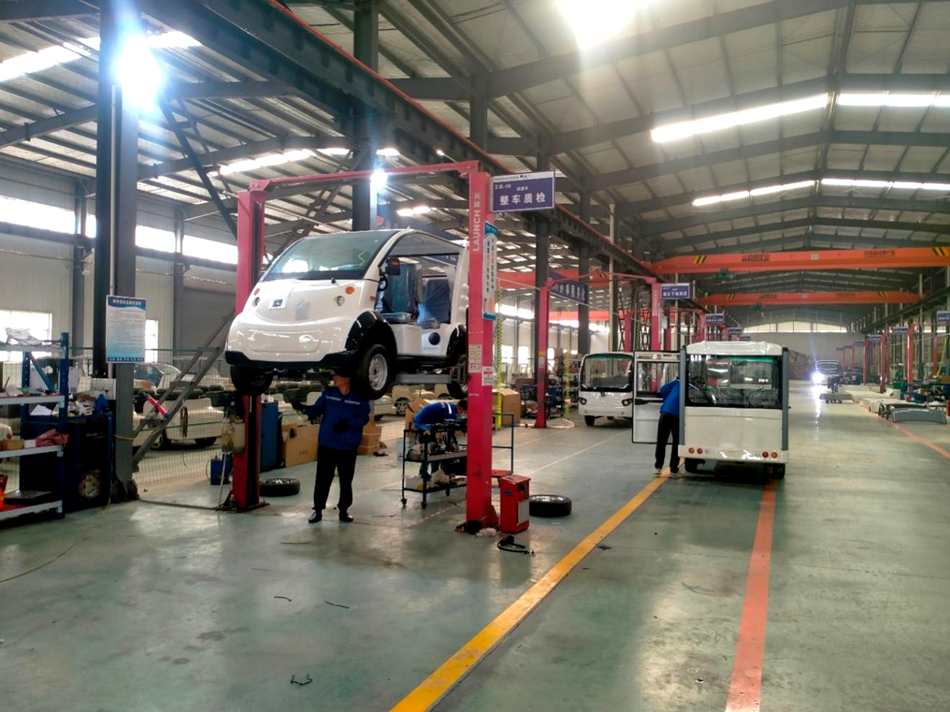
The marriage lift uses electric ball screws with ±2mm synchronization accuracy. The body arrives from paint via hoist. Glass adhesive is applied manually using a guide strip — not fully automated. EOL testing includes 4-wheel alignment and brake testing, required by road-legal vehicle regulations.
Battery packs are checked for insulation and charge before loading. Critical bolts use electric torque wrenches with per-unit recording — servo spindles were not specified to control cost.
Cycle time: 25 to 35 minutes per unit. Annual capacity: 5,000 to 30,000 units. The low-speed four-wheeler market is extremely price-sensitive, and this line balances precision against investment.
Technical Specifications
Applicable Models: L6e/L7e low-speed electric four-wheelers — heavier and more complex than golf carts; road-legal vehicles requiring 4-wheel alignment and brake testing at EOL; 5,000–30,000 units per year.
Line Layout: Split into two sections — chassis section (front/rear axles, motor, brakes) and body section (body drop and interior fitment). Slat conveyor 8mm thick, 2.5-ton capacity. Body delivered from paint shop via overhead hoist.
Core Equipment: Electric ball screw marriage lift (±2mm synchronization accuracy); EOL test station with 4-wheel alignment and brake tester; electric torque wrenches with per-unit data recording (servo spindles not specified to control cost); manual glass adhesive guide strip (not fully automated).
Key Technical Features: Precision-to-cost balance — servo spindles omitted in favour of electric torque wrenches, saving significant equipment cost while maintaining per-unit data traceability. Body/chassis split prevents paint contamination of chassis section. Manual glass adhesive with guide strip maintains consistent bead width without full automation investment.
Production Metrics: Cycle time 25–35 minutes per unit; annual capacity 5,000–30,000 units; EOL testing meets road-legal vehicle requirements; torque data recorded per vehicle for warranty traceability.