What Tests Does a Scooter Go Through Before It Ships?
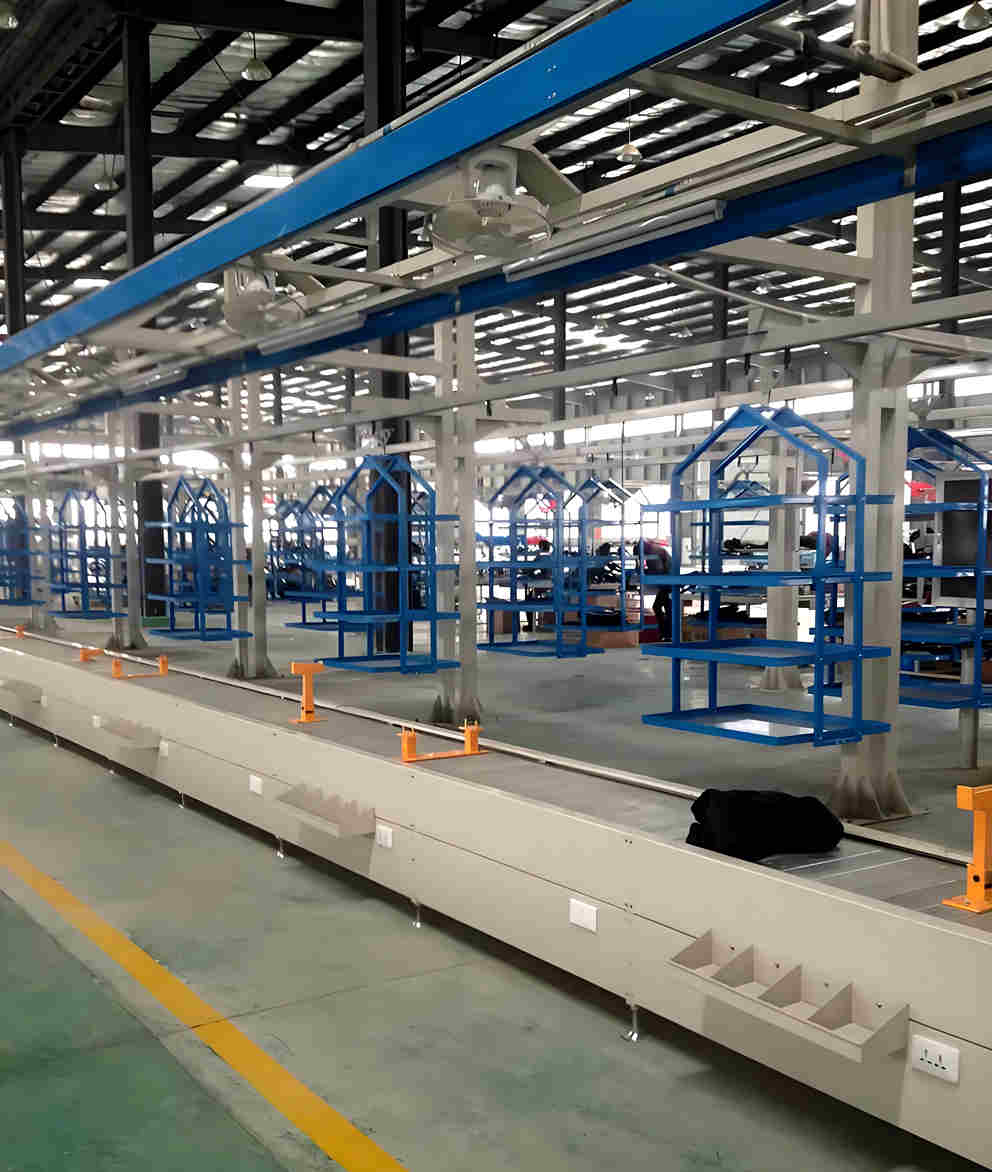
Finished scooters leave the main line via a roller conveyor and enter an independent post-assembly module. Inflation, visual inspection, functional retest, labeling/weighing, automatic wrapping — five stations, and the unit is ready to ship.
The inflation gun has a digital display. Set the target pressure; it stops automatically. An LED light box at the visual inspection station helps spot paint defects and panel gaps. The automatic wrapper uses PE film. Different profiles for scooters and motorcycles prevent loose film during transport or film that is too tight and damages the paint.
After wrapping, a weigh-and-label machine prints a tag with model, serial number, and production date. Weight data uploads to ERP automatically and links to the certificate of conformity. Roller speed adjusts to match the main line’s cycle.
This module does not consume main-line stations. Many factories overlook the downstream process, letting finished units pile up at the end of the line and slowing the entire flow. Decoupling final inspection from assembly improves effective throughput considerably.
Technical Specifications
Applicable Models: Finished electric scooters and motorcycles exiting main assembly — shared line for both two-wheeler types; compatible with lead-acid and lithium battery variants.
Line Layout: Roller conveyor positioned after main-line end; five stations arranged in sequence — inflation, visual inspection, functional retest, labeling/weighing, automatic wrapping; roller speed synchronised with main-line cycle to prevent pile-up.
Core Equipment: Digital display inflation gun with automatic stop at preset pressure; LED light box at visual inspection station for paint defect and panel gap detection; automatic PE film wrapping machine with profile settings for scooters vs motorcycles; weigh-and-label machine that prints model, serial number, and production date; ERP integration for weight auto-upload linked to certificate of conformity.
Key Technical Features: Independent module that does not consume main-line station space — main line focuses purely on assembly. Wrapping profile adjustment prevents film being too loose (causing transit damage) or too tight (damaging paint). Weight data automatically links to ERP and certificate of conformity, eliminating manual data entry.
Production Metrics: Five stations, processing each unit through the full downstream sequence; roller speed adjusts to match main-line cycle; decoupling final inspection from assembly improves effective throughput by eliminating main-line end congestion.