What Extra Stations Does a Three-Wheeler Need When Going Electric?
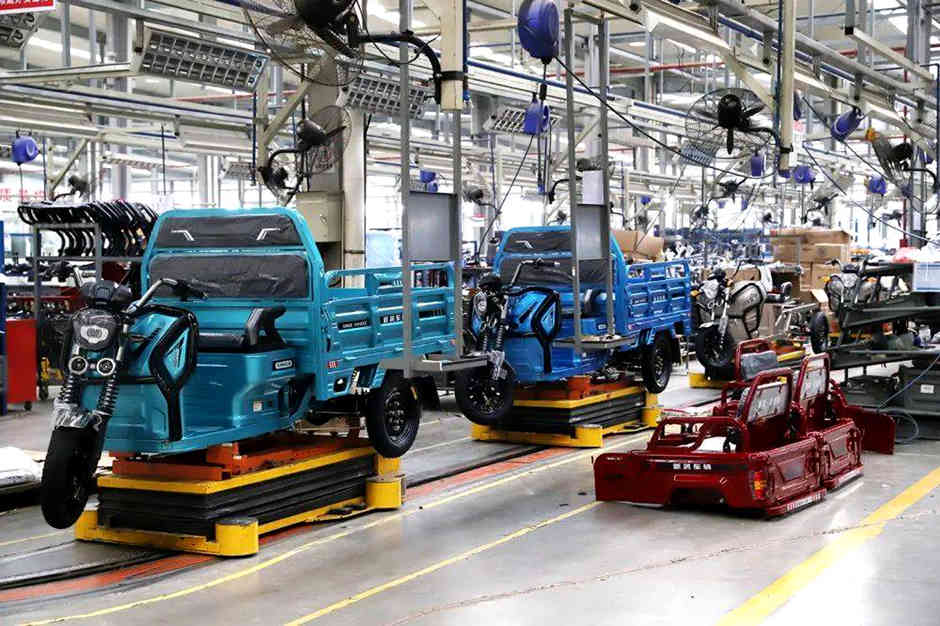
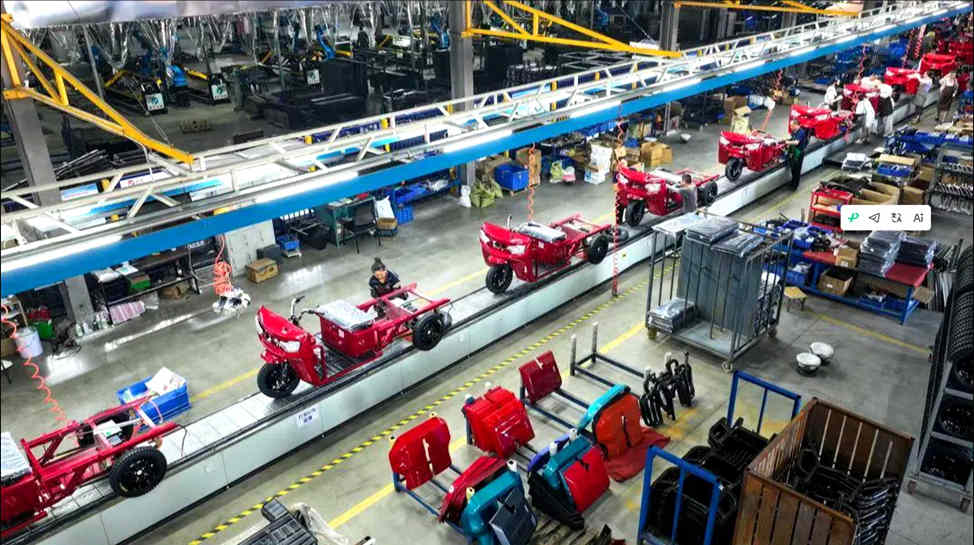
The difference from the fuel version: no engine, add battery and motor. The frame assembly flow is similar, but two dedicated stations appear in the middle — battery pack marriage and controller installation.
The battery pack does not ride the floor rail cart. An explosion-proof charging zone sits nearby. An AGV delivers the pack to the marriage station. A lift raises it to the frame bottom; the operator wears insulated gloves to connect high-voltage cables. Insulation and voltage must pass before the pack is released to the line. A laser alignment fixture checks coaxiality between the motor output shaft and the rear axle sprocket. Deviation beyond 0.5mm triggers an alarm.
Controller programming takes seconds via the OBD port. An interrupted flash recovers automatically.
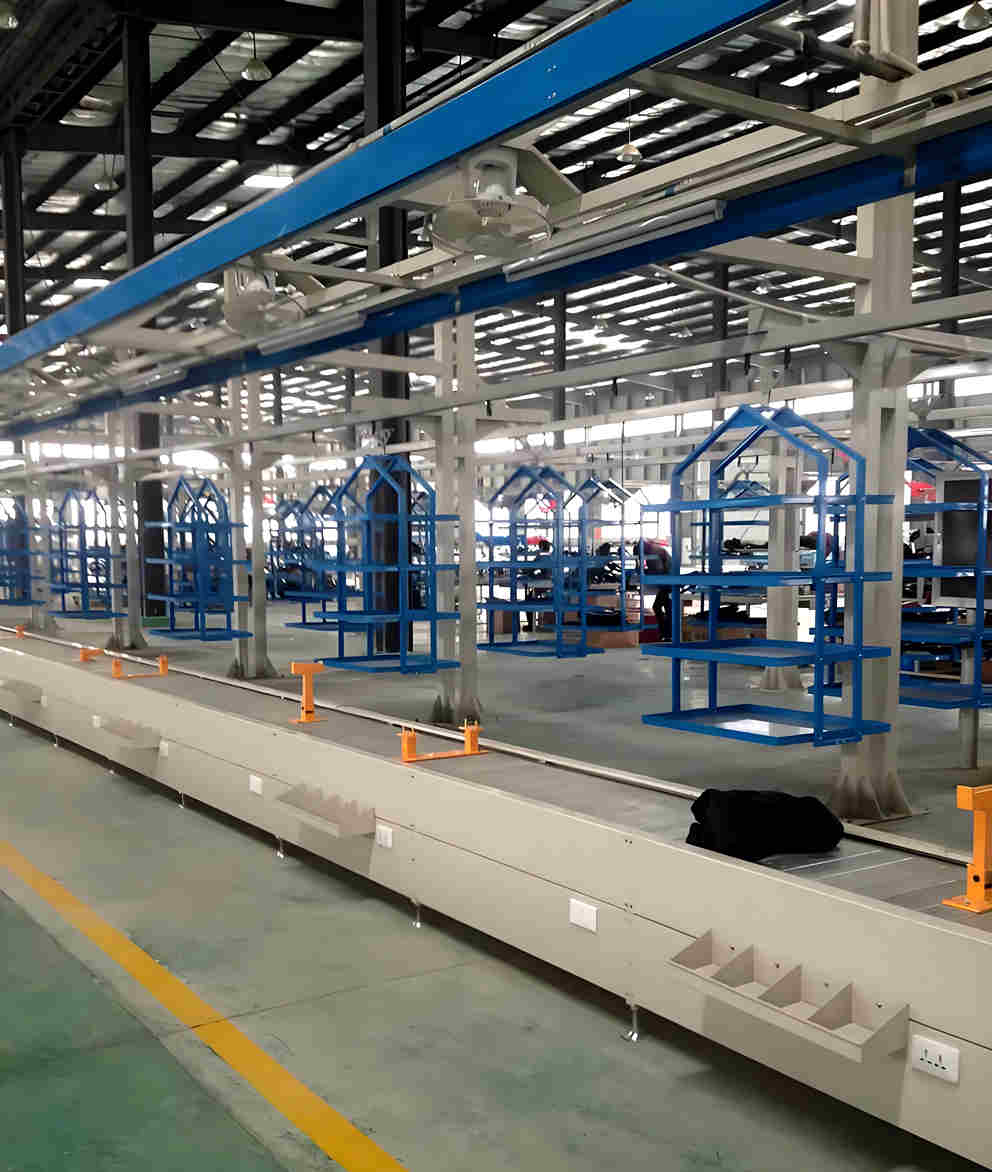
The line structure is similar to the fuel version — heavy-duty cart, 2-ton capacity, front-to-rear zoning. But removing the engine means the logistics path needs a dedicated lane for battery packs, isolated from metal parts. Safety compliance adds cost here.
Technical Specifications
Applicable Models: Electric cargo three-wheelers (delivery, agricultural, sanitation variants) — replaces ICE engine with battery pack + motor; 48–72V systems.
Line Layout: Heavy-duty floor rail cart (2-ton capacity), front-to-rear zoning similar to fuel version; dedicated battery pack logistics lane isolated from metal parts flow; explosion-proof charging zone adjacent to line; AGV delivery of battery packs to marriage station.
Core Equipment: Battery pack lift with insulated lift platform; laser alignment fixture for motor output shaft to rear axle sprocket coaxiality (alarm at >0.5mm deviation); insulation and voltage test equipment (mandatory pre-marriage); OBD port flash tool for controller programming with automatic recovery on interruption; insulated gloves and HV safety tools for operator protection.
Key Technical Features: Independent battery logistics path — battery packs do not ride the floor rail cart with metal parts. Insulation and voltage double-check before pack release to line. Laser alignment ensures coaxiality ≤0.5mm between motor and rear axle sprocket — deviation beyond tolerance triggers immediate alarm. Controller flash completes in seconds via OBD with auto-recovery.
Production Metrics: Cycle time 12–18 minutes per unit; line structure mirrors fuel version with added HV safety stations; safety compliance adds measurable cost for insulation, explosion-proof charging, and PPE.