Why Separate the Body Panels and the Frame into Two Parallel Lines?
The pain point for cabin three-wheelers is not the chassis — it is the body panels. Front fascia, rear fascia, roof. When painted sheet metal meets the frame, uneven gaps look cheap. A difference of more than 2mm is immediately visible to customers.
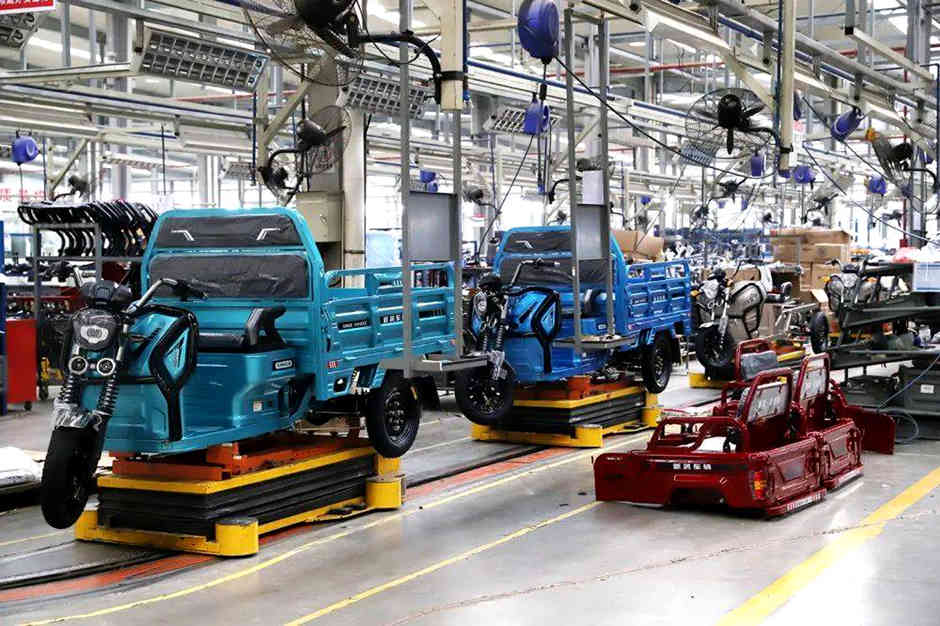
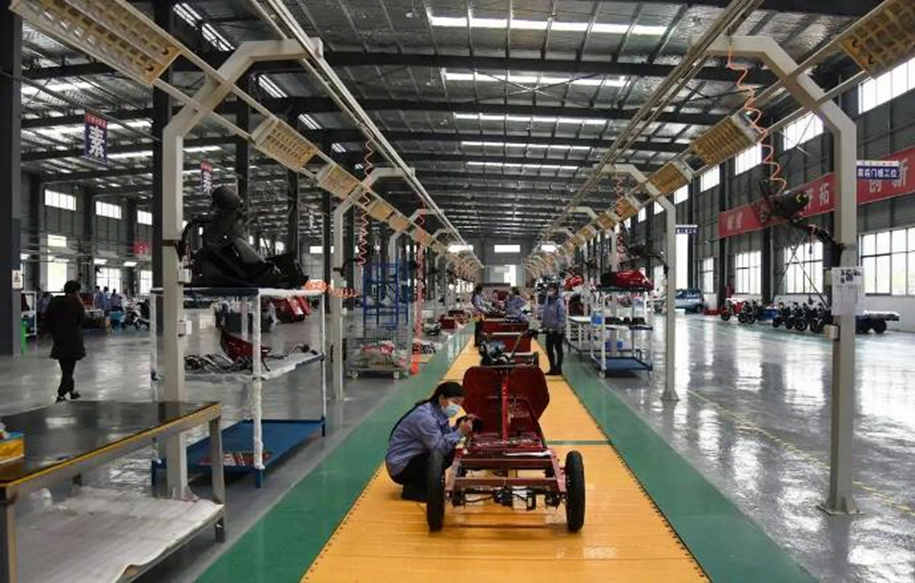
The solution is a dual-line layout. The main line handles frame welding and chassis parts. A separate body panel line runs in parallel: front fascia, rear fascia, and roof are positioned on a fixture. Locating pins lock the gaps. A robotic arm applies windshield adhesive and positions the glass — bead width stays consistent. Interior parts (seats, dashboard, dome light) go in after body marriage.
Gap tolerance: ±1mm. Two-stage positioning: pins for coarse alignment, datum surfaces for fine alignment. The two lines merge midway. Overall cycle time: 15 to 20 minutes per unit.
An unexpected benefit: rework. If a paint defect appears, fix it on the body panel line before marriage, without stopping the main line. Suitable for annual volumes of 5,000 to 20,000 units.
Technical Specifications
Applicable Models: Passenger three-wheelers (enclosed cabin), senior scooters, sightseeing carts — painted body panels assembled onto chassis frame; applicable to both fuel and electric powertrain variants.
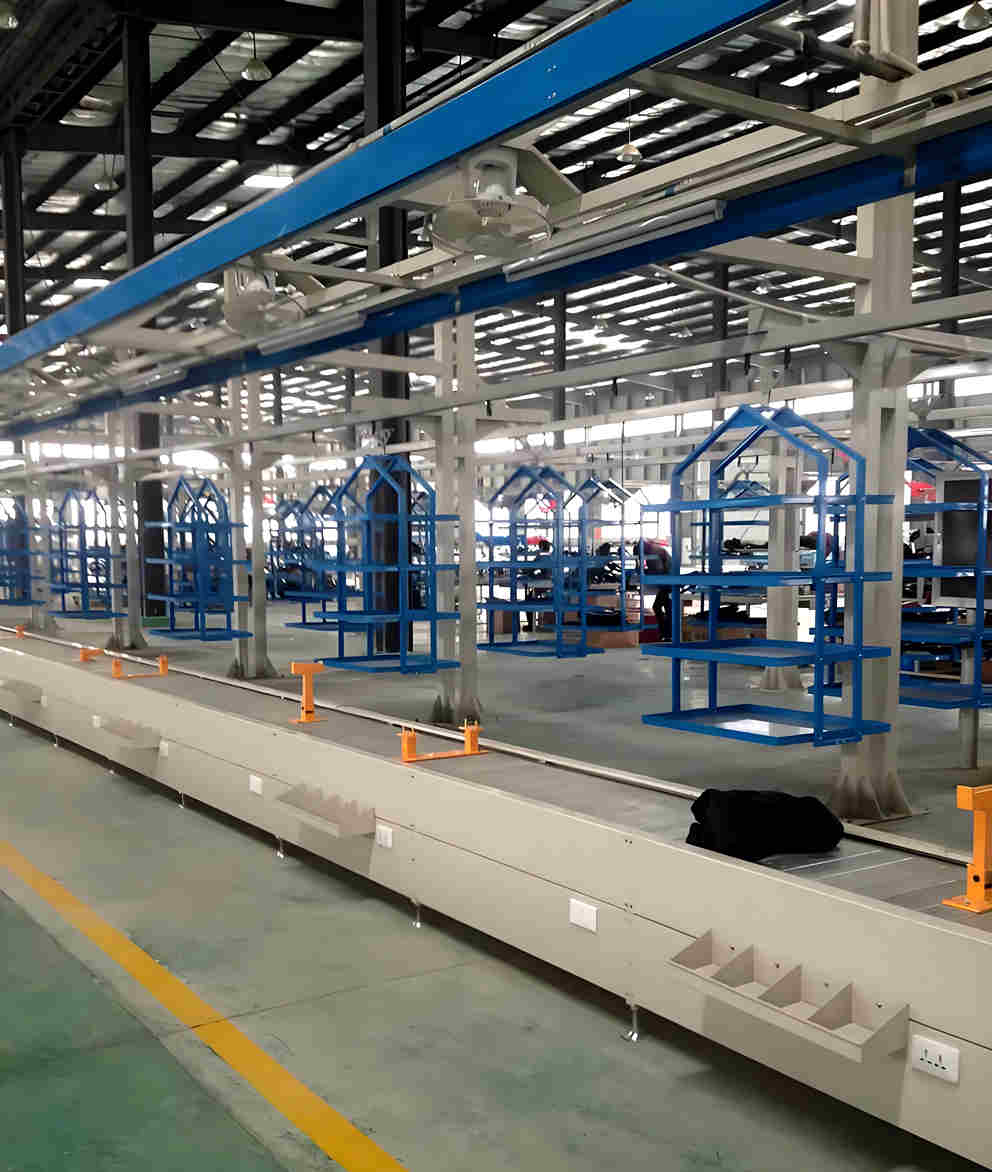
Line Layout: Dual-line structure — main line handles frame welding and chassis components; parallel body panel line handles front fascia, rear fascia, roof panel assembly; two lines merge midway for interior fitment; body panel line can operate independently for paint rework before marriage.
Core Equipment: Body panel positioning fixture with locating pins for gap control (tolerance ±1mm); robotic arm for windshield adhesive application (consistent bead width); two-stage positioning system — pins for coarse alignment followed by datum surfaces for fine alignment; electric torque tools for body-to-frame fastening.
Key Technical Features: Dual-line design solves the body panel gap consistency problem — gaps >2mm are immediately visible to customers. Two-stage positioning (coarse pin → fine datum) achieves ±1mm gap tolerance. Paint rework is performed on the body panel line before marriage, without stopping the main chassis line. Robotic adhesive application ensures consistent bead width that manual application cannot achieve.
Production Metrics: Cycle time 15–20 minutes per unit; annual capacity 5,000–20,000 units; gap tolerance ±1mm; body panel and chassis lines merge midway through the total cycle.