100,000~200,000 Units/Year | Wide Slat Conveyor + Friction Drive + Scissor Lift Marriage + HVIL + EOL | 60~90 sec/unit
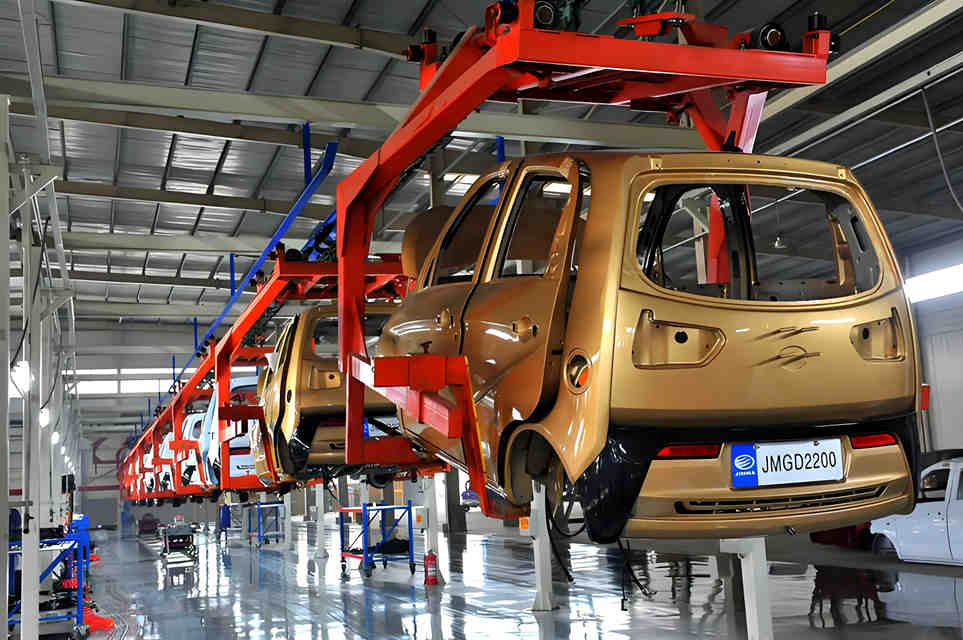
The two things that make EV assembly different are: the battery pack and high-voltage safety. The body and chassis still run on a wide slat conveyor — 2400mm wide, 3-ton capacity. The chassis section uses friction drive, which leaves no oil residue — important for battery marriage zone cleanliness.
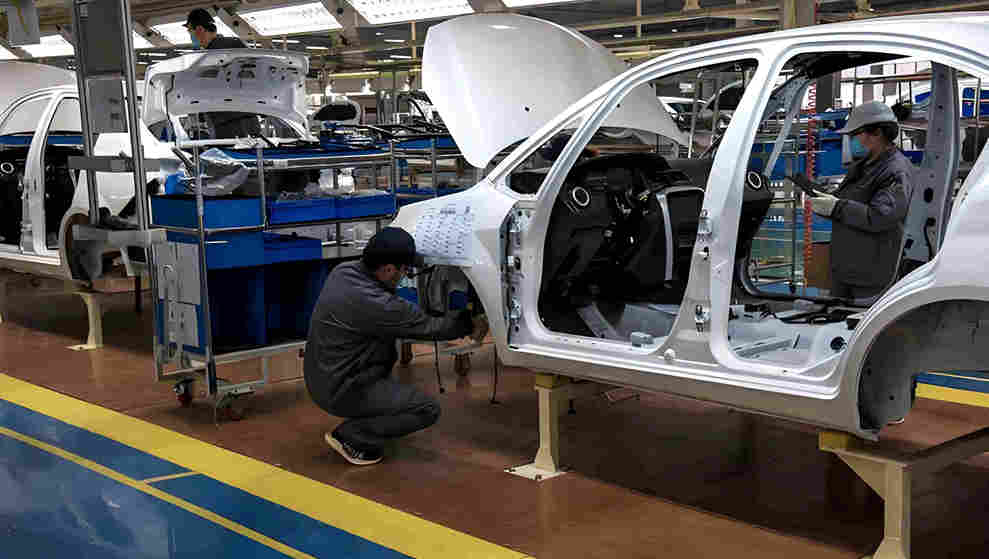
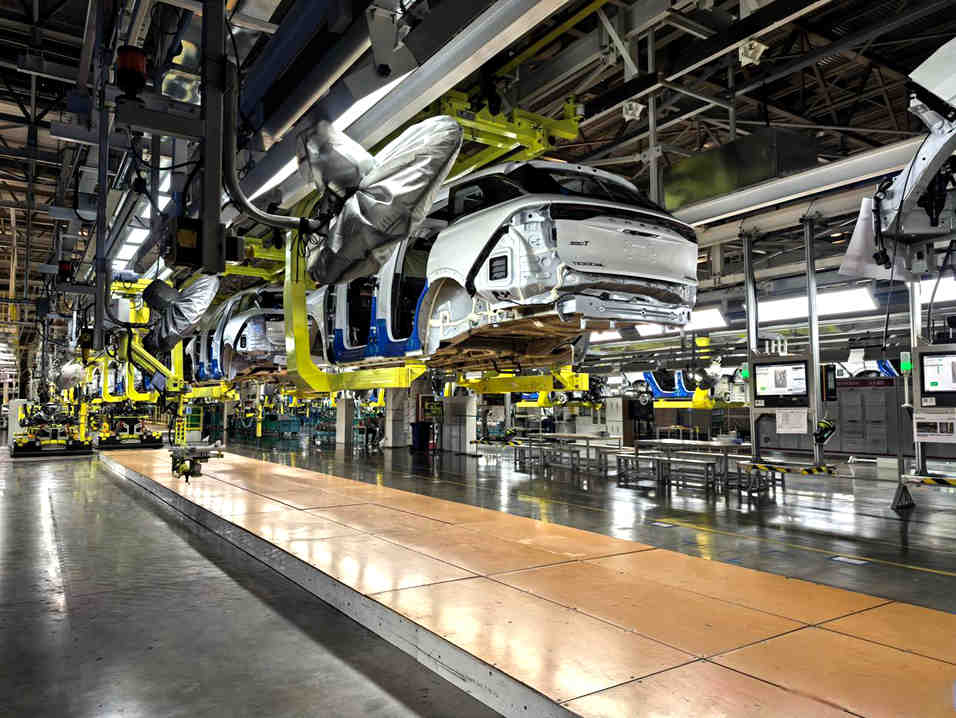
The trim section handles the dashboard, wire harness, headliner, and seats. The chassis section does the critical work: battery pack marriage. A twin-scissor lift raises the pack into the body from below. Synchronization accuracy: ±0.5mm. The marriage zone is enclosed with orange barriers, door interlocks, and voltage monitoring across the entire line. If any station detects a high-voltage fault, the HVIL system cuts power to the entire section.
The final section handles charge port installation, bumpers, doors, and software flashing. EOL tests include insulation resistance, charge compatibility, 4-wheel alignment, and dynamometer testing.
Fastener data is linked to each vehicle’s VIN. A 3D vision system at critical marriage stations compares actual assembly position against the CAD model in real time. Deviation beyond tolerance triggers an immediate alarm. Pallet tooling accommodates wheelbases from 2500 to 3000mm.
At 60 to 90 seconds per unit and 100,000 to 200,000 units per year, quality control relies on data traceability rather than manual inspection.
Technical Specifications
Applicable Models: BEV passenger cars with wheelbase range 2,500–3,000mm; compatible with multiple sedan models via flexible pallet tooling; annual capacity 100,000–200,000 units.
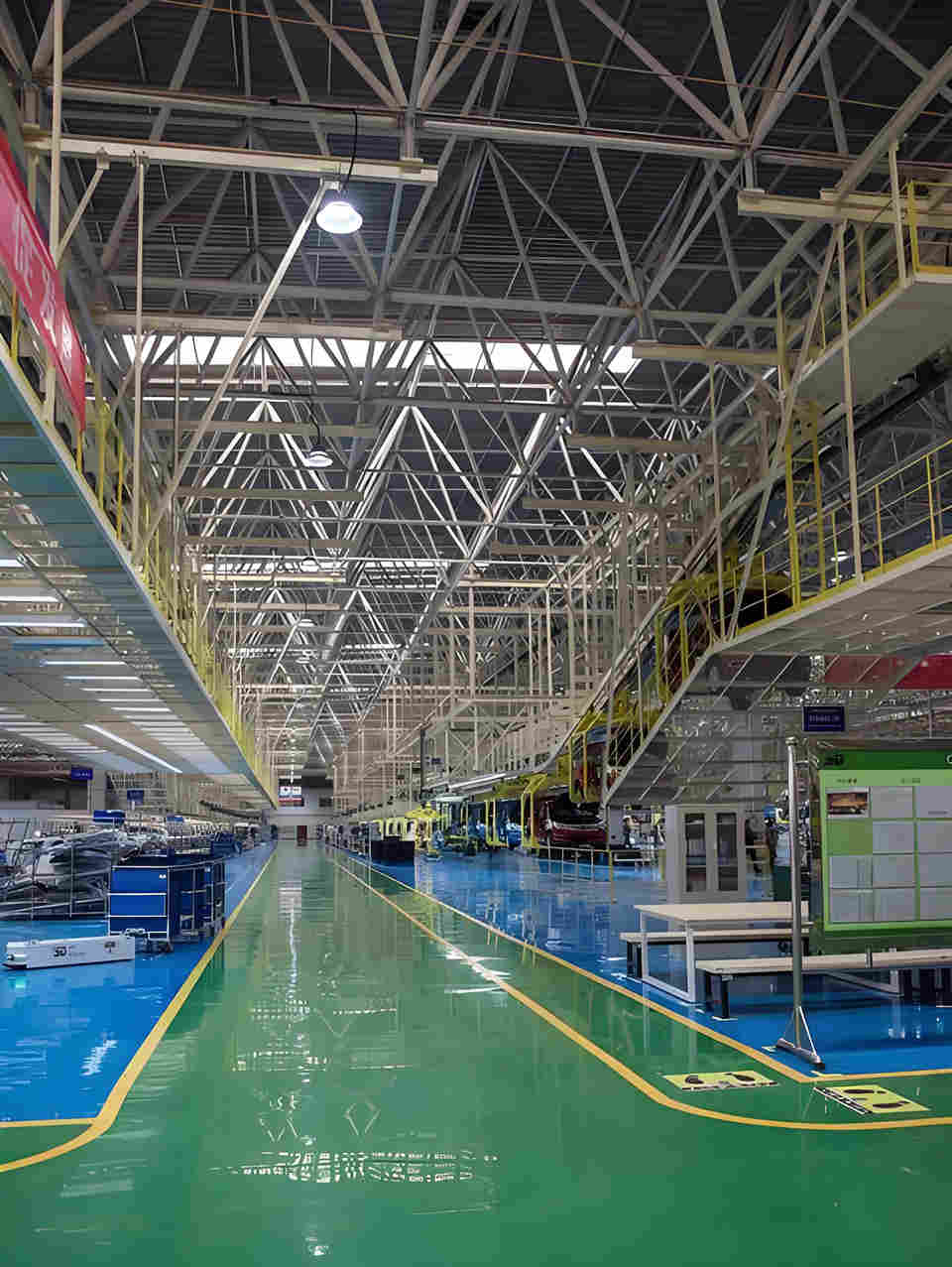
Line Layout: Four-section architecture — trim (dashboard, wire harness, headliner, seats), chassis (battery pack marriage — core station), final assembly (charge port, bumpers, doors, software flash), EOL. Wide slat conveyor 2,400mm, 3-ton capacity; friction drive in chassis section (oil-free for cleanliness).
Core Equipment: Twin-scissor lift for battery pack marriage (±0.5mm synchronization accuracy); HVIL (high-voltage interlock loop) system covering entire chassis section; 3D vision system at critical marriage stations comparing actual assembly to CAD model in real time; EOL test equipment for insulation resistance, charge compatibility, 4-wheel alignment, and dynamometer testing; servo spindles with VIN-linked data upload.
Key Technical Features: Enclosed marriage zone with orange barriers, door interlocks, and voltage monitoring across the entire line. HVIL system cuts power to the entire section if any station detects a high-voltage fault. 3D vision system triggers immediate alarm on deviation beyond tolerance. Fastener data linked to each vehicle’s VIN for full traceability. Pallet tooling accommodates wheelbase range 2,500–3,000mm without tooling change.
Production Metrics: Cycle time 60–90 seconds per unit; annual capacity 100,000–200,000 units; quality control relies on data traceability rather than manual inspection at high throughput.