10~15 min/unit | Floor Rail Cart Carries 3t Frame, Engine Alignment, Accumulation Buffer
Cargo three-wheeler frames are not welded elsewhere and delivered — they are riveted step by step on the line. Longitudinal beams and cross members are positioned on a fixture. A hydraulic riveter applies 200kN of force. Frame length ranges from 2.5 to 4 meters, weighing 200 to 300kg.
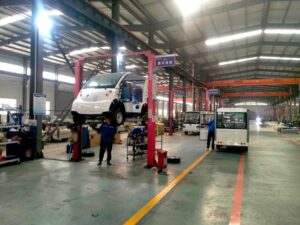
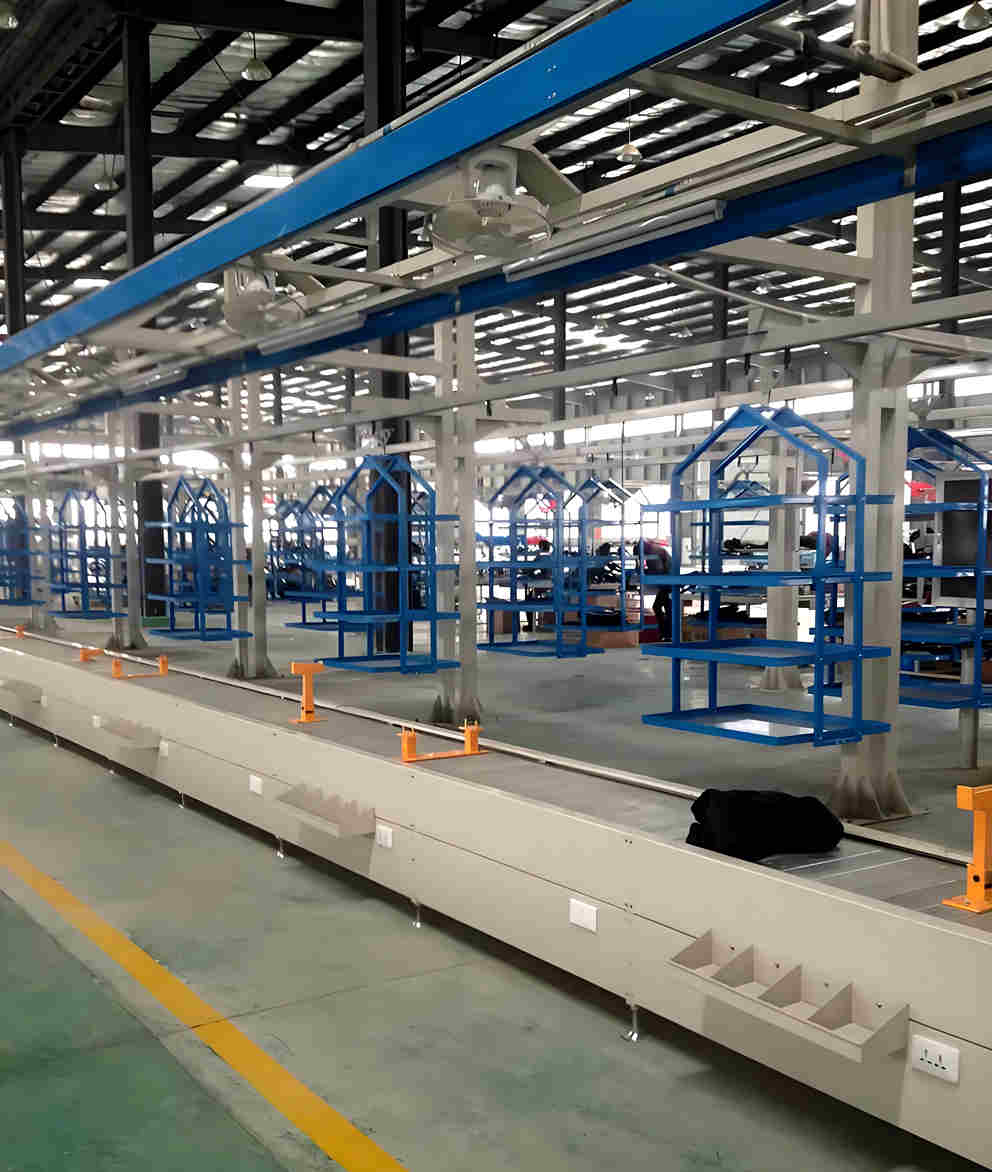
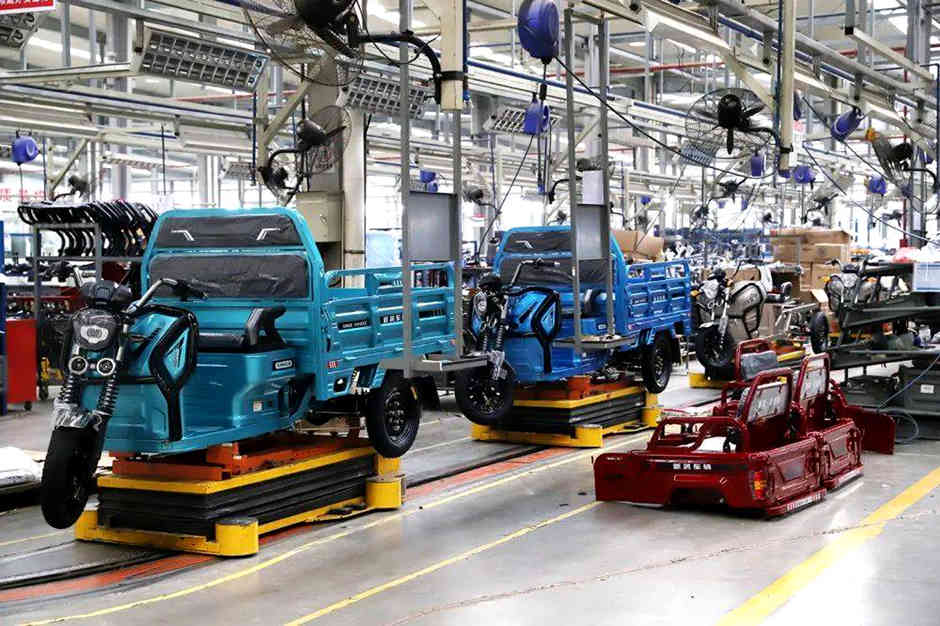
A floor rail cart carries the frame, rated at 3 tons. It travels from the riveting zone to the engine/rear axle marriage station. An alignment cart automatically finds the bolt holes; the operator only tightens from the side. The cargo bed is built on a parallel sub-line and transferred to the main line via a shuttle.
The cart uses four-wheel drive with side guide wheels. Positioning accuracy: ±1mm. Gradeability: ≥5°. An accumulation buffer zone holds 5 to 8 semi-finished frames, smoothing out cycle time variations between stations.
Cycle time: 10 to 15 minutes per unit. Annual output: 8,000 to 15,000 units. Separating the cargo bed line from the main line means that changing bed dimensions only requires modifying the sub-line.
Technical Specifications
Applicable Models: Cargo three-wheelers (fuel and electric) with 0.5–1.5-ton payload; frame lengths 2.5–4 meters; applicable to both flatbed and enclosed cargo variants.
Line Layout: Floor rail cart (rated 3 tons, four-wheel drive with side guide wheels) traveling from riveting zone through engine/rear axle marriage to cargo bed assembly; parallel sub-line for cargo bed fabrication; accumulation buffer zone holding 5–8 semi-finished frames between stations; shuttle transfer for cargo bed from sub-line to main line.
Core Equipment: Hydraulic riveter (200kN) for frame longitudinal beam and cross member joining; alignment cart for automatic engine/rear axle bolt hole positioning; floor rail cart with four-wheel drive, positioning accuracy ±1mm, gradeability ≥5°; infrared paint drying on cargo bed sub-line; laser gauge for cargo bed dimensional inspection after painting.
Key Technical Features: Frame is riveted step-by-step on the line, not delivered pre-welded — flexible for frame length changes. Accumulation buffer smooths out cycle time variations between riveting and marriage stations. Cart gradeability ≥5° ensures reliable operation even on uneven workshop floors. Separating cargo bed from main line means bed dimension changes only affect the sub-line, not the main line.
Production Metrics: Cycle time 10–15 minutes per unit; annual capacity 8,000–15,000 units; frame weight 200–300kg; cart positioning accuracy ±1mm; cargo bed sub-line independent operation from main line.