Engine Marriage + Battery Pack Marriage + Dual-Line Fluid Filling + Dual-System Diagnostics | 80~120 sec/unit
PHEVs are the most complex to assemble on the line. You need both an engine/transmission marriage station and a high-voltage battery marriage station. Two powertrains on one vehicle.
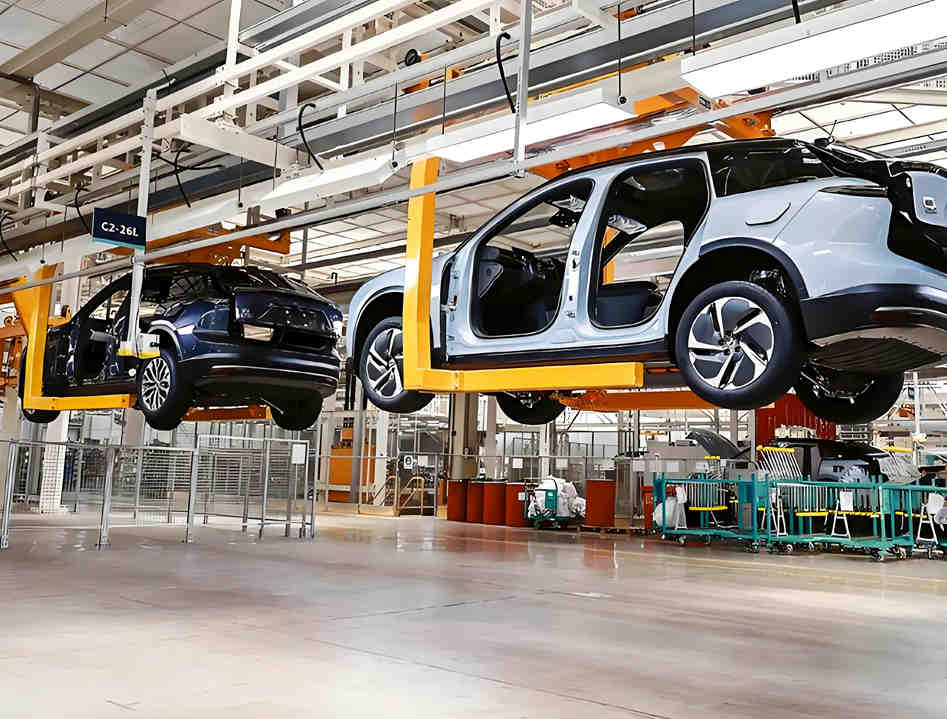
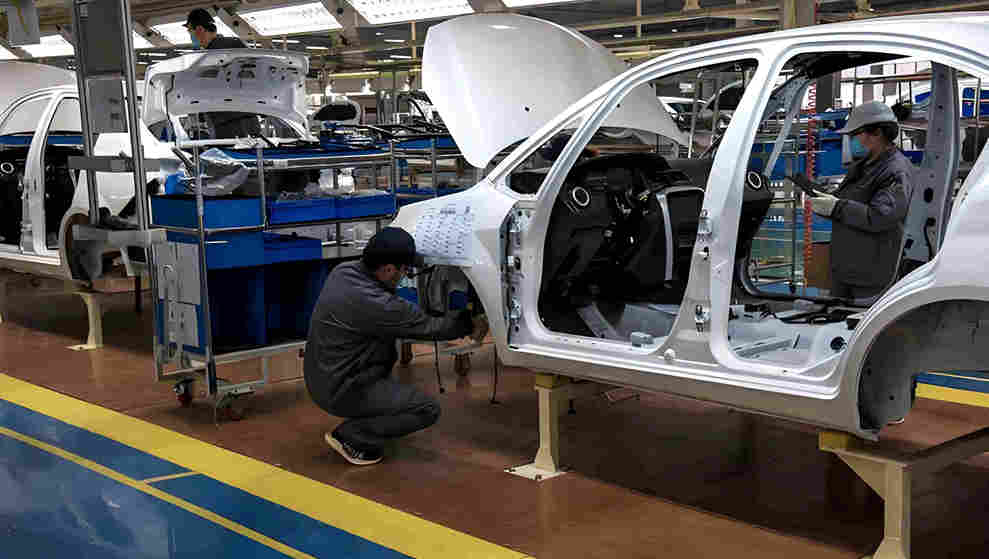
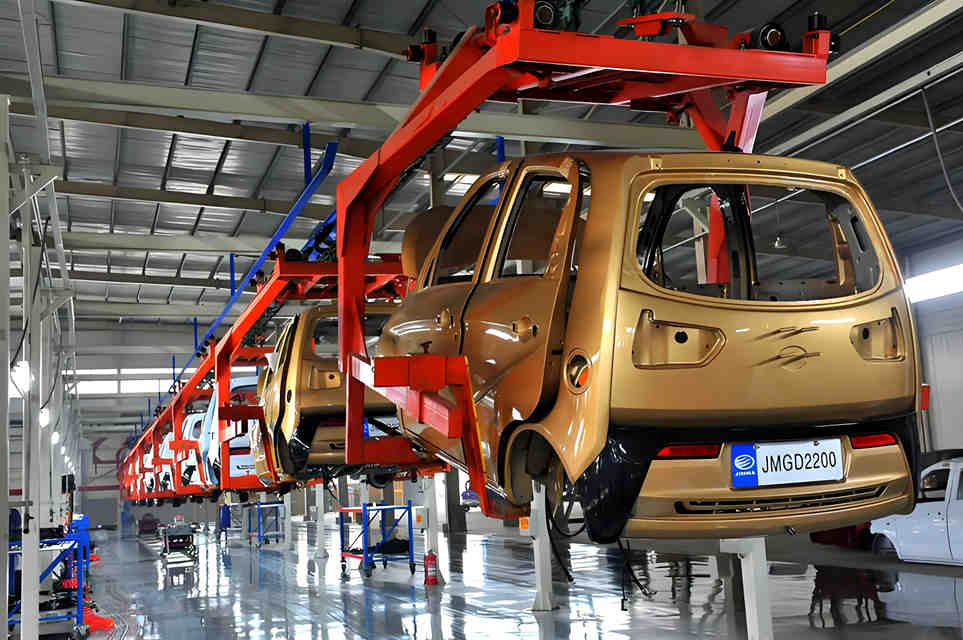
The line is approximately 50 meters longer than a pure EV line. The trim section is similar. The issue is in the chassis section: the engine arrives from the left via AGV, the battery pack from the right buffer zone. The two marriage stations are staggered — one in front of the other — preventing conflict.
Dual-line filling equipment handles both fuel and coolant circuits. Emissions testing must cover EV mode and HEV mode switching. CAN diagnostics must read data from both the engine ECU and the motor controller.
Cycle time: 80 to 120 seconds, slower than pure EV. Changeover via pallet tooling switches between PHEV and pure EV. High-voltage and fuel systems are physically separated. The main cross-contamination risk is in harness routing — keep high-voltage cables and fuel lines out of the same clip.
Technical Specifications
Applicable Models: Plug-in hybrid electric vehicles (PHEVs) with both engine/transmission and high-voltage battery pack; line approximately 50 metres longer than pure EV line; changeover between PHEV and pure EV via pallet tooling.
Line Layout: Extended EV line architecture — trim section identical to pure EV; chassis section with staggered engine marriage station (left side, AGV delivery) and battery pack marriage station (right side, buffer zone); dual-line filling equipment for both fuel and coolant circuits; CAN diagnostics covering both engine ECU and motor controller.
Core Equipment: Engine marriage AGV (left feed) and battery pack lift station (right feed); dual-line fluid filling equipment handling fuel and coolant independently; emissions tester covering EV mode and HEV mode switching; CAN bus diagnostic tool reading both ECU and MCU data; pallet tooling with PHEV/EV changeover capability.
Key Technical Features: Two marriage stations staggered to prevent conflict — engine and battery pack cannot occupy the same station simultaneously. High-voltage and fuel systems physically separated along the line. Main cross-contamination risk is wiring harness routing — high-voltage cables and fuel lines must not share the same clip. Dual-system diagnostics must read from both engine ECU and motor controller during EOL testing.
Production Metrics: Cycle time 80–120 seconds per unit (slower than pure EV); line length approximately 50 metres longer than pure EV equivalent; pallet tooling changeover for PHEV/EV mix; dual-path fluid filling; dual-system EOL testing.