55~60 sec/unit, OEE≥90% | Wide Slat Conveyor + Friction Chassis Drive + AGV Engine Marriage + Accumulation Buffer
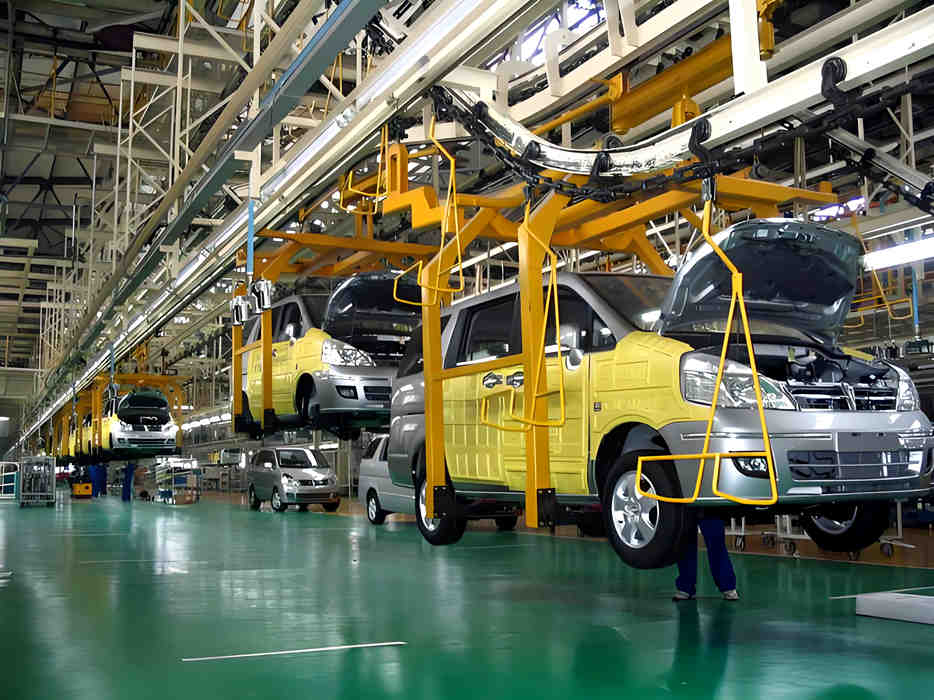
500 to 800 meters long. Four-section layout: trim, chassis marriage, final assembly, EOL. This is the classic fuel-vehicle assembly architecture, with an independent conveyor system for each section.
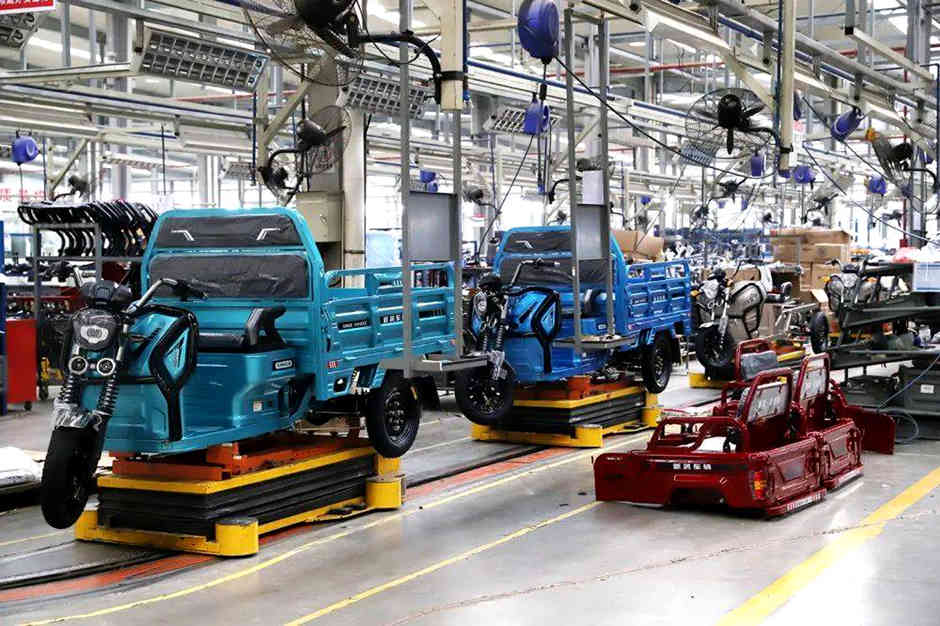
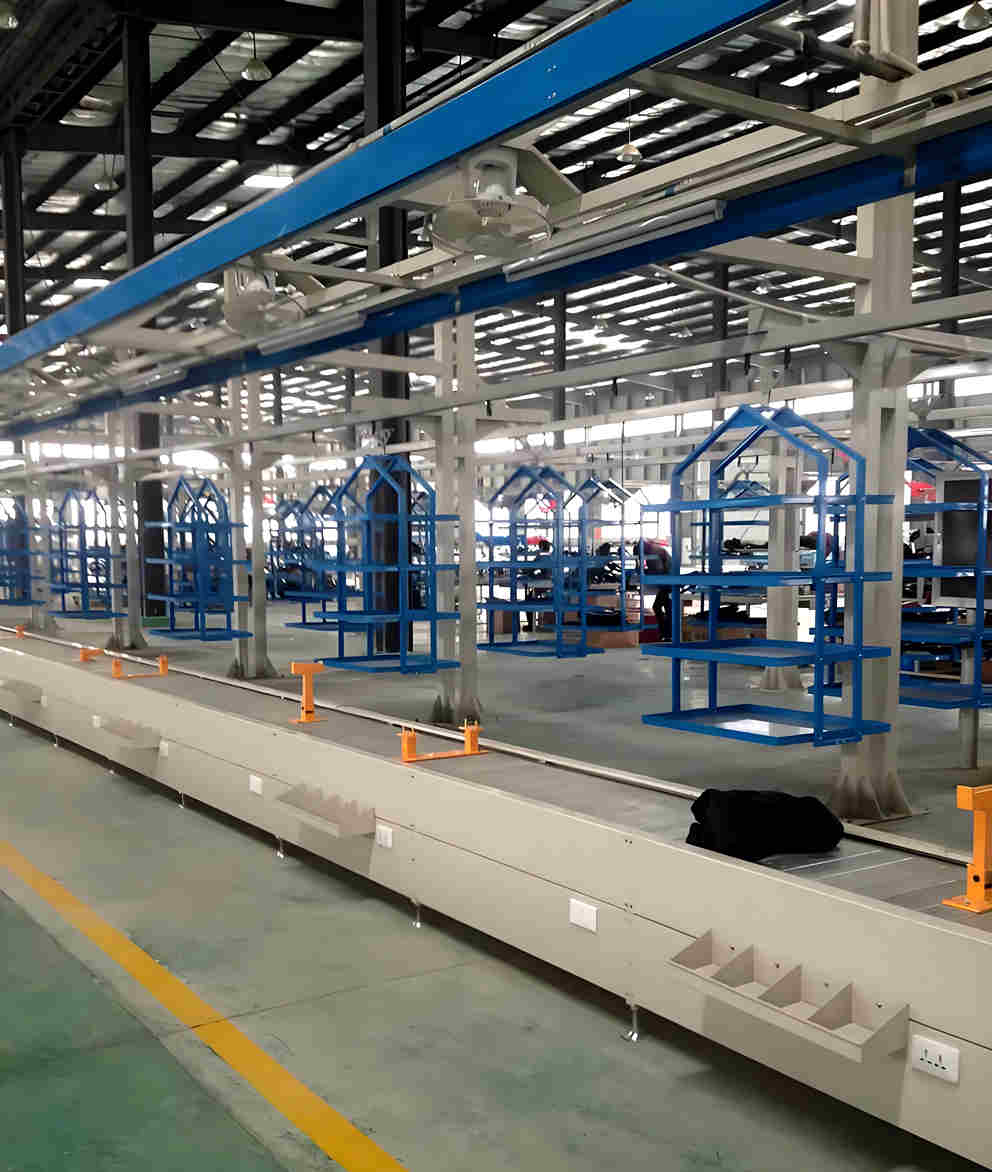
The trim section uses a wide slat conveyor, speed adjustable from 0.5 to 2m/min. Rolling material carriers hang alongside the body, so operators pick parts without turning around. The chassis section uses friction drive — no lubricant, since the chassis area involves extensive bolting and oil would affect friction torque.
The engine marriage AGV is the most expensive single piece of equipment in the chassis section. Laser-guided, it carries the engine assembly synchronized with the body, positioning accuracy ±1mm. Accumulation chain buffers at each section entrance hold 50 to 100 bodies. If a section goes down for a short repair, upstream stations continue feeding the buffer.
Servo spindles cover 100 to 500Nm. Fastening data uploads to MES with 10-year retention. Robots and assist arms handle instrument panel loading, glass adhesive application, and tire mounting. Ergonomic station design keeps working height between 900 and 1300mm.
OEE ≥90%, 55 to 60 seconds per unit, assembly defect rate below 0.1%. These are baseline requirements for established OEMs.
Technical Specifications
Applicable Models: ICE passenger cars and SUVs – the classic fuel-vehicle assembly architecture; applicable to both sedan and SUV body styles with pallet tooling adjustment; annual capacity 100,000-300,000 units at 55-60 seconds per unit.
Line Layout: 500-800 metres long; four-section architecture – trim (wide slat conveyor, speed 0.5-2m/min), chassis marriage (friction drive, oil-free), final assembly, EOL. Accumulation chain buffers at each section entrance hold 50-100 bodies. Each section has an independent conveyor system.
Core Equipment: Wide slat conveyor with rolling material carriers alongside body; friction drive in chassis section (no lubricant); laser-guided AGV for engine marriage (+/-1mm positioning accuracy); servo spindles covering 100-500Nm torque range; MES with 10-year data retention; robots and assist arms for instrument panel loading, glass adhesive application, and tire mounting; ergonomic station design with working height 900-1,300mm.
Key Technical Features: Accumulation buffers decouple section operations – if one section stops temporarily, upstream stations continue feeding the buffer, preventing full line stoppage. AGV engine marriage is the most expensive single piece of equipment in the chassis section. Ergonomic station design keeps operators from bending or reaching overhead. Fastening data uploaded to MES with 10-plus year retention for full lifecycle traceability.
Production Metrics: OEE greater than or equal to 90%; cycle time 55-60 seconds per unit; assembly defect rate below 0.1%; 10-year MES data retention; accumulation buffer capacity 50-100 bodies per section; ergonomic working height 900-1,300mm.